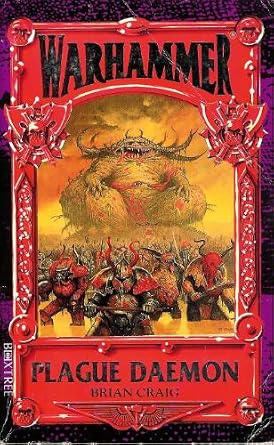
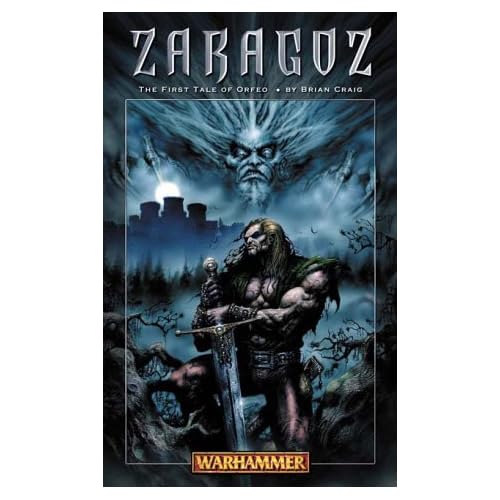
Seeing as I read the other two tales of Orfeo, I figured I would read the third one too, even if I was a bit weary of the trilogy after the second installment. Does it pick up, or is this one long rant about mediocrity? Read on and find out.
Orfeo keeps spinning his yarn to the caliph, and he does seem to have regained some of his talent, and we may consider the previous tale something of a detour, or perhaps a lull. Not just in terms of what the hell it had to do with what the caliph was asking about in the first place, but also in terms of its quality as far as plot and characters go.
This tale is quite clearly Arthurian. Throw it away if you hate all things Camelot-Merlin-Knights-related. Does it need to be? Kinda. We do again explore another corner of the Warhammer World, and this time it is Albion (though it could have easily been Bretonnia without too much tweaking). While the previous tale suffered deeply from its generic setting, this one has much more attention to cultural aspects and various traditions. Thumbs up for that, even though I am personally not crazy about Arthurian stuff.
The plot, briefly. Elves are shipwrecked in the small kingdom of Morien where a young, inexperienced and not exactly awesome king Herla must deal with trouble that arises in connection with that. Rifts grow between the king and his bard Trystan, and between the king and queen, the king and his people, the king and his horse, his mates.... Only kidding about the horse, but rifts grow everywhere, and it all comes to a head in the end. No surprise there.
There are two protagonists as such, Herla and Trystan. Are they gay then? No, I wouldn't say that. They just seem to embody two aspects of Morien's culture and this is fine. Unless one hates the bard-cum-wizard role or something like that. They do have some depth of character, but they are both, as I see it, embodiments of principles, arch- or stereotypes, and somewhat without surprising depths or frailties. Be that as it may, they are after all characters in a tale within a tale, Orfeo's teaching tools, if you will. The other characters... Good enough. No complaints here, really.
Oh come on, you've guessed already that those elves are fishy.
I am perfectly ready to admit that I am no expert in Arthurian lore, so various references, homages or pastiches may have been beyond me. I know enough to detect the undercurrent (that doesn't take much), and I also get the reinvention of The Wild Hunt as the Storm Warriors, even without a strong passion for Celtic myth. People who love this stuff more than I do, may either love or hate this book more than I do. You'll see Merlin, Arthur, shades of Lancelot... Probably more than that.
The other two books dragged in places. This one does too. Let's assume that it's not Orfeo who tells boring tales to the caliph, and let's assume that HE is not paid per word or expected to fill a certain number of pages... See where I am going with this? I think an editor with a red pen would have helped. Such an editor might have crossed out stuff that even slow kids had already gotten, or he might have written "unclear" when it came to certain passages.
Chaos, again, creeps up, rather than invade with heavy armour, horned helmets and big axes. It lurks and pounces on the morally weak, sticks a talon in shortcomings, spreads like a disease, and doesn't just punch you in the face. This is what I like best in Craig's books. The demand for "heroes" who are strong in character, not just in sword arm... it's a plate full of vegetables without much meat, and without a dessert. It makes these books a bit boring at times, it makes the heroes less cool than quite a lot of other characters in Warhammer books, and yet it does not really offer enough food for thought and moral complexity to sort of leap out of its genre (fantasy schlock?). That is of course a problem, but it seems inherent, or structural. The second problem in the trilogy is predictability, but again, many Warhammer books suffer from this, and twist endings can end up contrived and annoying as well, so... Meh.
Rating: 3 or 4 out of 5. Rivals the first book as the best in the series.





2pUBRUDMvJoUg~~60_35.JPG)