Monday, 30 September 2013

Orc team V

These are all the players so far. I have another thrower and lineman/blitzer, but their green bits are still showing, and I will make two more and prime them all together.

As you can see, the troll is a biggun, but he's not doing Jesus arms, so he should be alright standing up.

"Move, you dumb bastard!"

Orc team IV

And yet another two, ready to go. Same as the previous post in the sense that they can be blitzers or linemen. I don't think doing something funny to the helmets will accomplish much except lose the football-feel to them.
 
Here they are in a buddy movie pose. I have a fabulous ability to make my weapon snips look really poorly executed in pictures.
 
In terms of colours, I am thinking black and white/light grey with silver helmets. Not settled on anything yet though.
 

Sunday, 29 September 2013

Orc team III

Two more guys. Linemen or blitzers... there is no difference. At least not at this point. I thought about making the blitzers more runner types, but that left the linemen a bit dull. I think I will resort to coloured base edges.

"Collision course"

Orc team II

There are several nifty orc teams out there, ready to go, and I can remember seeing good converted ones too. The world may not need mine at all, really. So why have I made one? I wanted a team that looks as if it plays blood bowl, ie dynamic players, and I had a few ideas to try out.

These orcs are in uniforms. The inspiration are the guernseys and shorts og aussie rules football. Not wanting them too aussie rules-inspired, I gave them football helmets.

They are fat. The idea is that they are more of a pub team, less than fit.

No two are alike. A lot of that is in the posing.

They could still get pads, but I kinda like them without.

Here are two. "The hand off."

Saturday, 28 September 2013

Spectator? Team owner?

To each their own.

Orc team I

Troll is done already, and obviously it will not do to have a hungry troll about without some gobbos. I believe these four all deserve to be in the squad.

Two are feisty fighters, two are uncomfortable about getting hurled or eaten by the troll.

Thursday, 26 September 2013

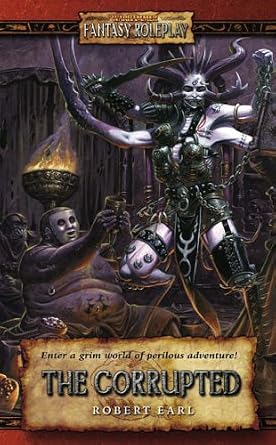
Book review: The Corrupted

Robert Earl has long been on my radar, that is to say that I have noticed his name and have another of his books lying around (unread), so I gave "The Corrupted" a read.


The plot delivers a few twists, so I won't say too much about it. It features a fat wizard and his apprentice travelling North in search of another wizard who has become corrupted by Chaos, as well as a band of Witch hunters in hot pursuit as well. I don't know if I ruin it for anybody by saying that this all turns pretty ugly along the way, the further North they get.

As earlier reviews have suggested, I like my chaos more as a cancer than as a punch to the face. The corruption of denizens of the Warhammer World is a bit more interesting to read about than just somewhat pitiful attempts at describing big battles, be they legendary or not. This book offers plenty of that, and it is fairly nifty attempt to knot together different strands, characters entangled in the same sordid matter. I like how Earl treats Chaos, at least in this book, as something infectious, a stain that won't come out, no matter how hard you rub it.

What's good? It offers some interesting characters, some unlikely. How many obese grey wizards have YOU come across in Warhammer books? it may not be worth the read for that reason alone, but still. It also offers some more insight into wizards in general, though they may seem a bit too ridiculous, comical or silly for some people who like their magic a bit more cool. I think what I like best is the frailty and somewhat pathetic nature of all the characters in the book, though some teeter on the brink of silliness at times.

What's bad? It's too short. Granted, the plot might not have been able to stretch across another 100 or so pages, but I think I would have like to see an honest attempt. At least another 50 could have done the book good, and there was no indication that Earl could not have pulled this off, having a wealth of decent characters and a rich setting to draw upon.

Rating: 3 out 5. A Twix, not an actual meal, tasty but not filling.

Wednesday, 25 September 2013

Troll

This mofo needs a bit more work. Chains, a thumb... minor details. He is a big boy, but he fits a small base. May need a counter when he goes down.

Repositioned, disarmed, padded. Not neutered, though. Mean and stupid.

Testing my new lightbox without bothering to rearrange lamps much... so far it seems like it improves things quite a bit.

Tuesday, 24 September 2013

Fear not, I have been busy in the laboratory, but until I make a suitable light box to improve my pictures, I will keep my current project under wraps. It is near completion, though I ran out of vital components. Arms, as it happens.

Meanwhile, I will continue with some book reviews, and I should be back on track later this week, all depending on work and such.

Monday, 23 September 2013

Book review: Realm of Chaos

Edited by Marc Gascoigne and Andy Jones, short stories by a range of authors.


It may not exactly be fair to review them all in one go. It comes across as guilt by association for some who may have written a brilliant pearl of a novella, yet find it buried deep in this... book.

I read the collections of short stories, embittered by my experiences with Warhammer novels. Not that they are all so poor, and I have even reviewed some of the better ones that I have read on this blog, but I find that several have too little substance to carry you through a whole book. Inane plots, boring characters with no depth, popular films transported and adapted to the Warhammer world, cliches... all in a flurry of adjectives to disguise the fact that you've paid good money for something that most college level aspiring writers could probably produce. At least with a gun to the head.

As you may have guessed, this one has a few real stinkers.

I'll tell you where Andy Jones went wrong: He put his own short stories in. These are godawful. Grunsonn's marauders are a sad effin bunch, and the comedy is neither funny nor in the right place, as most of the other stories seem to go for a splash of horror. They feature in no less than two stories in this book. Both should have been flushed.

I'll tell you where Marc Gascoigne went wrong: Not shouting "Blood for the Blood God!" and slaying Andy Jones for his awful stories.

There are two stories by Gav Thorpe as well. Some Warhammer enthusiasts may love his work, and I confess I have not read enough of it to truly weigh in with an opinion on his authorship. I am guessing it may be better NOW than when he wrote these two short stories, but to be fair, they are both high enough in quality to warrant being included. Predictable, yet with enough mood and detail. The last one, "Faithful Servant" is actually quite good, open-ended (fairly rare in Warhammer books) and with a good sense of how not to try and make MORE out of just one moral question.

Most of the other stories deserve neither praise or mockery. If I had to pick a favourite, I would say "Wolf in the Fold" by Ben Chessell (who also got two stories in here), though "Hounds of Winter" may deserve a mention as well, with Jonathan Green also contributing two stories.

Maybe I am too picky, but I just did not see anything here that absolutely needed to be published. I sometimes use these books as starting points, looking up the authors to see if they've written more, interesting looking stuff. I have not done that this time.

The book was essentially free, and I paid a pittance for S&H, and the read was quick. I would perhaps recommend it to commuters or young readers, but not to veteran readers or picky curmudgeons like me.

Rating: 2 out of 5. Inspires people to write their own.

Friday, 20 September 2013

Nurgle team VIII

Last bunch of rotters. Meet the feebles. Or rather, meet these optimists, catchers you might call them and laugh a bit.

Maybe it was not exactly need that made me give them this pose, but it IS pretty good for football.

Thursday, 19 September 2013

Book review: Storm Warriors

Seeing as I read the other two tales of Orfeo, I figured I would read the third one too, even if I was a bit weary of the trilogy after the second installment. Does it pick up, or is this one long rant about mediocrity? Read on and find out.


Orfeo keeps spinning his yarn to the caliph, and he does seem to have regained some of his talent, and we may consider the previous tale something of a detour, or perhaps a lull. Not just in terms of what the hell it had to do with what the caliph was asking about in the first place, but also in terms of its quality as far as plot and characters go.

This tale is quite clearly Arthurian. Throw it away if you hate all things Camelot-Merlin-Knights-related. Does it need to be? Kinda. We do again explore another corner of the Warhammer World, and this time it is Albion (though it could have easily been Bretonnia without too much tweaking). While the previous tale suffered deeply from its generic setting, this one has much more attention to cultural aspects and various traditions. Thumbs up for that, even though I am personally not crazy about Arthurian stuff.

The plot, briefly. Elves are shipwrecked in the small kingdom of Morien where a young, inexperienced and not exactly awesome king Herla must deal with trouble that arises in connection with that. Rifts grow between the king and his bard Trystan, and between the king and queen, the king and his people, the king and his horse, his mates.... Only kidding about the horse, but rifts grow everywhere, and it all comes to a head in the end. No surprise there.

There are two protagonists as such, Herla and Trystan. Are they gay then? No, I wouldn't say that. They just seem to embody two aspects of Morien's culture and this is fine. Unless one hates the bard-cum-wizard role or something like that. They do have some depth of character, but they are both, as I see it, embodiments of principles, arch- or stereotypes, and somewhat without surprising depths or frailties. Be that as it may, they are after all characters in a tale within a tale, Orfeo's teaching tools, if you will. The other characters... Good enough. No complaints here, really.

Oh come on, you've guessed already that those elves are fishy.

I am perfectly ready to admit that I am no expert in Arthurian lore, so various references, homages or pastiches may have been beyond me. I know enough to detect the undercurrent (that doesn't take much), and I also get the reinvention of The Wild Hunt as the Storm Warriors, even without a strong passion for Celtic myth. People who love this stuff more than I do, may either love or hate this book more than I do. You'll see Merlin, Arthur, shades of Lancelot... Probably more than that.

The other two books dragged in places. This one does too. Let's assume that it's not Orfeo who tells boring tales to the caliph, and let's assume that HE is not paid per word or expected to fill a certain number of pages... See where I am going with this? I think an editor with a red pen would have helped. Such an editor might have crossed out stuff that even slow kids had already gotten, or he might have written "unclear" when it came to certain passages.

Chaos, again, creeps up, rather than invade with heavy armour, horned helmets and big axes. It lurks and pounces on the morally weak, sticks a talon in shortcomings, spreads like a disease, and doesn't just punch you in the face. This is what I like best in Craig's books. The demand for "heroes" who are strong in character, not just in sword arm... it's a plate full of vegetables without much meat, and without a dessert. It makes these books a bit boring at times, it makes the heroes less cool than quite a lot of other characters in Warhammer books, and yet it does not really offer enough food for thought and moral complexity to sort of leap out of its genre (fantasy schlock?). That is of course a problem, but it seems inherent, or structural. The second problem in the trilogy is predictability, but again, many Warhammer books suffer from this, and twist endings can end up contrived and annoying as well, so... Meh.

Rating: 3 or 4 out of 5. Rivals the first book as the best in the series.

Nurgle team VII

Two more rotters. These are a bit less dynamic, but hey, if you were sick and your stat line was average... one has bigger arms, hoping to ST up one day, perhaps.

Wednesday, 18 September 2013

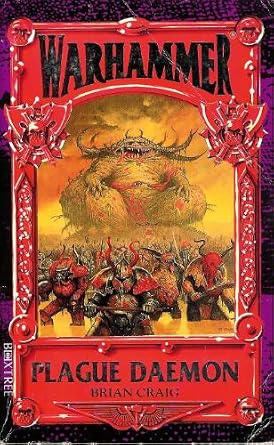
Book Review: Plague Daemon

There are many reasons why I read this book. They are, in no particular order:

1. I read all the Warhammer books I can find that feature Nurgle-stuff.

2. It is the second tale of Orfeo, and I read the first one and liked it.

3. I have liked Brian Craig's other books.

4. I like the earlier, older Warhammer books better than the new ones.

5. It is set in yet another not so familiar region of the Old World.


All these reasons, however, took on the guise of daemons themselves, and they became the very source of my disappointment.

I did not like this book. While there is some development of the metaplot that features Orfeo and his captor from the first book (and this I liked, overall), the tale itself is damn near daft and fairly uninteresting at best. It's the tale of a man-at-arms (and so we are told repeatedly) with the personality of a pack of lunch meats and his struggle to save a small kingdom in The Border Princes from the clutches of the plague god, Nurgle. Again, without revealing much, I think one can say that this features treachery, wizardry and douchebaggery.

I struggled to find one interesting character in the entire book. For the life of me, I could not care less what happened to these people. If Craig (ambitiously) wanted his characters to be more ordinary, "cometh the hour, cometh the man"-type of heroes then... Well, it was a fine thought, but I don't think it succeeded in its execution. It's a difficult task to let your characters mature and blossom into heroes, and they often start out too lame, or go through too much of a transformation. In this case it's more of the former, and it is somewhat predictable as well.

How good is the writing, how rich and powerful the imagery? Not very. While I would be a hypocrite if I asked for the very blood, gore and action that later Warhammer novels offer in spades, I struggled to find excitement in even the most climactic scenes. The plot just sort of drudged along, and the whole thing did feel very much like a tale. A boring one at that, and this book, weaker in terms of plot than the first one, really needed some extra colour... You know, people diving in slow motion as stuff explodes. Nothing ever did.

Is this - like some of the other books I have read and reviewed - a treasure of knowledge? Will wisdom be yours if you read it? Alas, no. The Border Princes, much like Norsca, Chaos Wastes etc. is one of the less charted regions of the Warhammer world, and thus it offers the chance to have any sort of kingdom located there that you may want or need. While it's hardly feasible to go on and on describing details about a place and its culture, this all came across as very generic. It could almost literally be anywhere. As for Nurgle-stuff... Nothing new, no deep insights.

This felt very much like a part two of a trilogy. I yawned, I soldiered on, but I was not terribly amused or impressed. I have definitely seen better from this author, so I was somewhat frustrated by this book.

Rating: 2 out of 5. Boring, a missed boat.

Nurgle team VI

I actually like the gw rotters, but nevertheless I have still made my own.

I see rotters as sick humans, so I tried to keep them at that size. Also my warriors are not huge, and it looks silly if the rotters are bigger.

Tuesday, 17 September 2013

Nurgle team V

Here are the other two warriors, ready to rumble for the crow god.

I gave them fatter legs, footballer's thighs and did some work on their bellies. You cant tell in the picture, no.

Monday, 16 September 2013

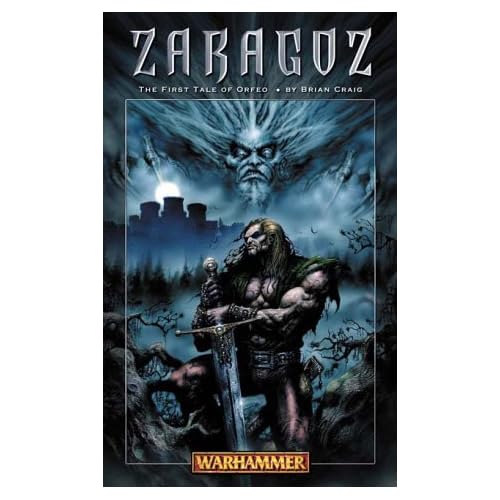
Book review: Zaragoz - Orfeo trilogy 1

Here's another of the older Warhammer books that I enjoyed.


This is part one of three, all completely different books, that are tied together by being the tales of Orfeo, a wandering minstrel-type who is captured by a pirate king somewhere in Araby. His first tale features himself as the main character (the others do not), and it is perhaps the superior story out of the three. The plot - without giving too much away - revolves around the struggle for control of a small Estalian city state where chaos lurks. In terms of genre... Once again, I succeeded in finding a Warhammer book without massive battles, infamous warlords and destruction on a grand scale. This is more fantasy-horror-thriller stuff, though it does drag in parts.

There are two obvious advantages to this book: The settings. It offers rare scraps of info about Estalia and Araby, places largely ignored or passed over quickly by the majority of Warhammer writers. That may have something to do with where the authors are from, but it may also have something to do with the way the Warhammer world has come to be about invasions from the North again and again... Do I like Craig's Eastalia and Araby? I like his Estalia. His Araby is something out of "1001 Nights" with strong dose of Orientalism and some PC "let's not speak ill of this pastiche of that big world religion that some people speak ill of"-sentiment where folks in Araby pretty much appear to be very much like... Arabs. In books for boys, written 100 years or so ago. The Estalians... Well, it smacks of Quijote and (inspiration from?) Shakespeare, Lovecraft and perhaps Dumas, and this is all quite good, with a nice mood and sense of the place and people, generic and Warhammer-deep though it all may be.

Another positive is the way Chaos is portrayed. This is seemingly where Craig and I meet eye to eye. I like it. Chaos is not "thousands of warriors in heavy black armour, come from the North to bash you!" but more of a creeping temptation, something that individuals are seduced and corrupted by, more so than this "forces of darkness!"-shite that there is way too much of in books designed to sell you a new army or something similar. Hell, there's even a philosophically minded character (I won't say who) who tries to explain his involvement with chaos, and how it "works" for lack of a better term. How many Warhammer books have proper attempts at metaphysics? Not many. Most just tend to tell you that within the Chaos realms or wherever daemons are involved, anything can happen. The puppy can talk, okay? It's Chaos! It's a daemonette on a skateboard, okay? It's Chaos! That may work for a young audience or people who fancy a quick "eeew!" reaction, but it does get tedious. If anything, I would have liked more of it, but it may undermine the tale if the characters understand TOO much about how the world(s) work, and appreciate that it can be hard to work in large sections where characters basically just explain themselves.

The plot does drag at times, several characters have next to no personality, and the main character himself, Orfeo, seems an annoying composite of ideas. I hesitate to say it, but he does not get more interesting in the next two books, and he seems to be something of a relic from the early, less fleshed out Warhammer world, representing the sort of "anything goes character" which does not seem to fit in very well in later books.

And lastly: WTF is up with that cover? Did they just put what they thought was a pretty cool picture on the cover? It doesn't seem to have much to do with the book or depict any of the characters, at least not accurately. I have noticed that with quite a few Warhammer books now, and often wondered why.

Rating: 3 or 4 out of 5. Dragged too much and had a gallery 2-D characters.

Nurgle team IV

Next up a couple of warriors.

I thought about making them truly fat, but settled on just a mild overweight and no specific mutations.

Sunday, 15 September 2013

Nurgle team III

Size comparisons... an old GW blocker a pestigor and a beast of nurgle. Blocker is crouching a little.

Nurgle team II

I heart pestigors. Both on the pitch and from a design perspective. Alas the GW pestigors are hideous in a bad two-dimensional way, other manufacturers have either made them huge (for ST 3 players at least) or very static and posey. Much as I like a "come at me, bro"-pose, I like chaotic teams a bit more... chaotic.

So these are my plague goats this time around.

Saturday, 14 September 2013

Nurgle team I

I have long been amongst Grandfather's disciples, and I own several nurgle teams at this point. Sadly they perform abysmally and suit my style of play like... an orc suits a math lecture?

Anyway. Here is my most recent beast of nurgle.

Friday, 6 September 2013

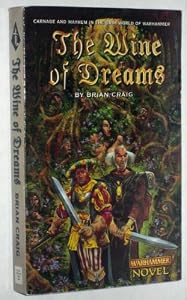
Book review: Wine of Dreams

My, don't I read a lot these days? I read this a while ago, but I am procrastinating as far as painting miniatures goes.


Whether or not this is Brian Craig's best book or not... I would perhaps not go that far. It is one of the earlier Warhammer books when these were perhaps geared a little more towards inspiring roleplaying in the Warhammer World and not so much towards selling the latest revamped army for big battles. But I digress...

This is essentially a coming of age story, as a young boy in a small town in the Empire get involved in the family business as a wine merchant. Riveting, eh? It IS actually surprisingly good. Not because you learn anything about pinot noir or anything like that, but because it offers a nice contrast to the cast of characters in other Warhammer novels who are "merely" badass warrior-types. This book goes a long way on the strength of having essentially "promoted" what would have been supporting cast in any other book where the focus is on warlords and arch villains and such. These are ordinary people facing inordinary things as Chaos creeps up on them, and this works well.

It is difficult to reveal much of the plot without spoiling the whole story for people, so I won't attempt it really. There are indeed horrors right on the doorstep in the little village, and it is foolish to dream of adventures, running after girls, drinking wine...  Nah, it's not fair to paint this as a cautionary tale in that sense, and Craig would perhaps not appreciate it if I suggested that his book has a puritan message. The book does revolve around whether or not Chaos can be handled, managed or perhaps "sipped", and themes such as temptation, curiousity and conflicting loyalties adds depth.

I will pause momentarily to wonder why quite a few of the older Warhammer books seem to feature gypsies, when gypsies are hardly dealt with either in the actual roleplaying game or boardgame. Yes, I know of the strigany/strigoi-stuff, but apart from that, it seems somewhat neglected in the higher level official stuff, yet present in several books. In this book there are gypsies playing a vital part in the story as well, and it all works quite well. They are more or less the only true stock characters. Unlike many other Warhammer books, there are not many purely functional, artificial or two-dimensional characters as such (a stout soldier comes close, but is sufficiently well written). Hooray for that. And for me the idea of dramatic encounters with Chaos in the middle of the otherwise reasonably safe Empire offered a fine contrast to some of the more large scale adventures in other books.

Read this book if you're sick of grandiose "slay the demon, before Chaos claims us all!"-books, grim tales of grim anti-heroes in grim circumstances or ill-disguised sales promotion. This book is not selling anything. Well... maybe wine.

Rating: 4 out of 5. A few annoyances here and there.

Thursday, 5 September 2013

Book Review: Blood For The Blood God

I tend to go for the somewhat older Warhammer-books these days. More on the reasons in another rant, but this is one of them.


C.L. Werner usually delivers, and his writing is rich and his characters cool. Sometimes too cool, perhaps. One does have to accept a certain lack of depth in characters in this sort of lit, and that women are either hideous crones or busty temptresses, that relationships and motives are usually not terribly complicated, and that there is plenty of gore.

It's more or less why I read it...

This book is pure barbarian fiction. It's Conan-stuff, and not involving The Old World as such. It would not require much tweaking to not be a Warhammer-novel at all, and I LIKE that. I hate it when I sense stats, game mechanisms, etc at work. The setting here is so obscure (Chaos Wastes) and ill-defined that it's essentially of no consequence whatsoever, and the only explicit tie with the Warhammer World would be the four great powers, and I am not even sure I recall Slaanesh turning up for the party.

The plot in short: Many years ago a great king was killed by The Skulltaker, Khorne's champion. His kingdom fragmented, and now eight tribes (like the star of chaos, eh? Warhammer cleverness for you.) keep each other in check. Our hero belongs to one of these tribes, and he is somewhat naf, at least to begin with. The skulltaker returns after all this time, wanting the head of every tribal chief, and in order to prevent this, our hero must go on an epic quest for a weapon to slay the Skulltaker.

I am somewhat ashamed to say that I really liked this book. It captured Khorne extremely well, and it lacked subtlety much like you would expect from a book about The Blood God. It probably also lacked surprises, at least major ones.

What's bad about it? I am not particularly fond of Werner's tendency to think up a plot with a massive pattern in it. Not saying twists and turns are required on every page, but you kinda see where the story is going, and thus you go through motions and it taxes the writer's ability to entertain you with descriptions and evocative imagery. It's like watching football, knowing in advance what the score will be. This leads to hyperbole, and the whole thing is close to keeling over into silliness at times. Where your line for "silliness" is drawn will have a massive impact on your enjoyment of this book.

There is a wealth of information about tribes in the Chaos Wastes, and much like in other Werner books (Palace of the Plague God, Wulfrik) we get more depth and humanity added to these eeeeevil hordes that threaten The Old World. This is good. I like the "playthings of the chaos gods"-aspect, and the sense that these people (norse, barbarians, etc) have a raw deal, culture shaped by their environment, personalities, hopes and dreams, etc. Does that then make them less villainous? Perhaps. I don't find that to be such a massive problem, seeing as I have more than 12 summers under my belt.

Rating: 4 out of 5. It does drag for a bit here and there and gets repetitive.

Wednesday, 4 September 2013

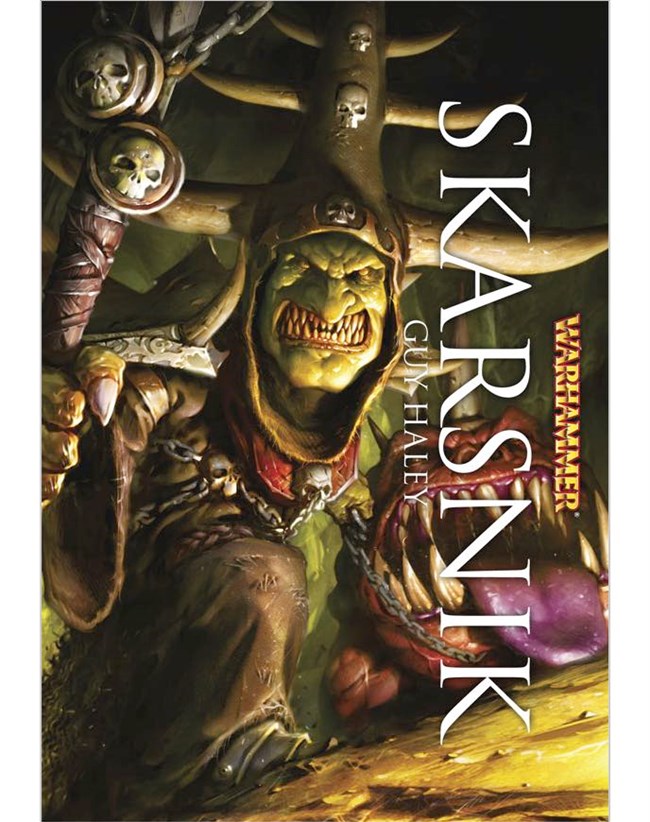
Book review: Skarsnik

I read the book "Skarsnik" by Guy Haley without huge expectations, and thus it does deliver.


I would not want to spoil it by revealing too much of the plot, but to sum up briefly: A playwrite who was abducted by goblins and now sits in an asylum reveals his story to a scholar (and the scholar's companions), and thus we get the story of Skarsnik the goblin king, as told by a human, an epic (?) tale of a rise to power.

Over all the book is well written. The language is diverse, the plot is decent, if not terribly exciting. This seems difficult to avoid when choosing this "teller within the tale"-format, and the ending is somewhat predictable and not very climactic. I put the book down with a sense of "that's that then" and a bit of a shrug. The attempt at a double climax, both the end to the book, and a big battle left me unimpressed.

The book's strength is its wealth of information about goblins and their society and culture. If the book had been a bit more consistent ("goblins don't have friends as much as favourite rivals" ... and yet "bromance" abounds) it would have been even better in that regard. Let me stress that point: It's worth the read JUST for the information, and there is an inspired vision quest along the way.

Skarsnik himself could be a far more interesting figure if Haley had truly gone all out with the "frustrated genius, surrounded by idiots"-angle, and avoided the pitfall of just trying to make him really cool. It falters at times, and the book struggles a bit to give an accurate picture of how smart Skarsnik is. His cunning plans seem somewhat trivial, and his ruthlesness has become quite a fixture in Warhammer-books where dim readers need reminding that the evil main character is indeed NOT to be cheered for. That a reminder is needed that this is indeed a nasty character is not... great.

Balancing goblins between cute, comical, and really nasty is tricky. Haley manages that, but mostly by correcting imbalances with the opposite. ie when the goblins become too cute, he lets them do something extremely brutal. It works somewhat okay.

The dialogue... I hated a lot of it, I must say.

The supporting cast is largely weak. Some of the characters have very little depth, others have stories that just seem to flop without development. That said, there is a pretty cool shaman that goblin-lovers will no doubt love for his stereotypical greatness, and a few others.

I hate it when I read Warhammer books and see game mechanics at work. There's a big battle that reads like a battle report in White Dwarf. There are challenges, descriptions of weapons (fit for a card) and encounters with monsters that never really come to life. Like holding the recipe for the dish you're eating. A strong sense of "I see what you did there" is impossible to shake. To my mind, the writing MUST be strong enough that I don't sit there guessing stats for characters.

"Skarsnik" is a good read, if you like goblins.

Rating: 3 out of 5.

Sunday, 1 September 2013

Minotaur conversion wip 2

I reworked the legs and added fur, pads and gloves. Not sure what I think of him. Looks vicious, at least. Perhaps he is too bestial, but concept-wise I like minotaurs as dangerous, barely controlled monsters, and not "my friend with the bull-head who loves souvlaki".

Maybe he needs some chains.